What UPF 50+ on a SANTINY swim skirt is promising, and what it is not
More than fifty pieces in the range print UPF 50+ on the label, and the figure is easy to read as more than it is. What a UPF number measures, why 50 is the line the sun-safety bodies draw, what happens to it when the cloth is wet or stretched, where the garment stops protecting you, and how a rash guard fits into the rest of what dermatologists ask for.
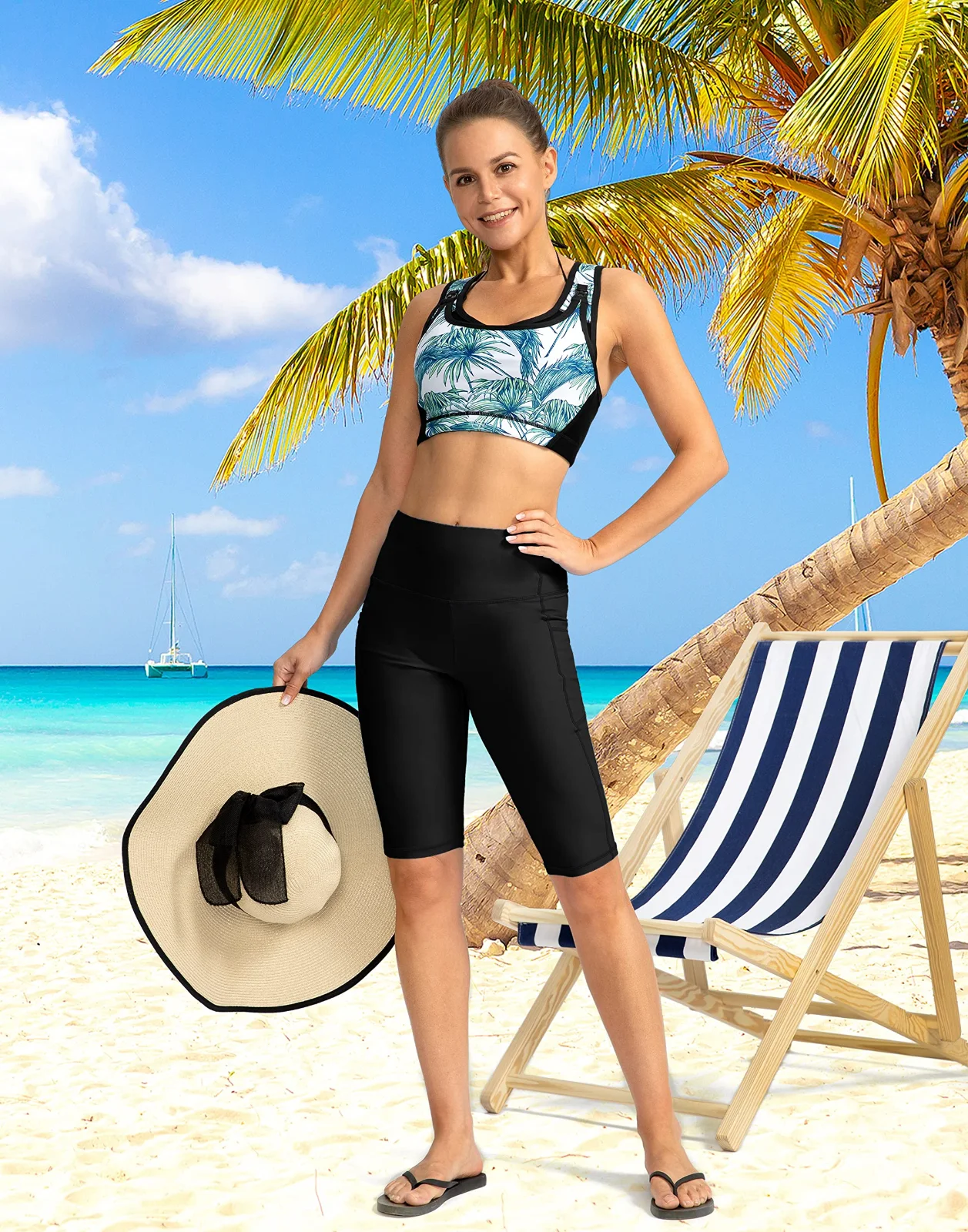
What a UPF number measures
UPF is a label that tells you how much ultraviolet radiation a piece of cloth will allow to pass through it. The Skin Cancer Foundation writes that a UPF 50 fabric "blocks 98 percent of the sun's rays and allows two percent (1/50th) to penetrate", and that relationship is the core of what a UPF number represents. When a garment carries a UPF figure, that number applies to the fabric itself in a controlled state: dry and not stretched. The Skin Cancer Foundation explains that higher numbers mean less UV reaches the skin under the cloth, and it sets thresholds for different levels of protection. The Skin Cancer Foundation also classifies a UPF from 30 to 49 as "very good protection" and puts 50+ in its top band. The label number is not a promise about a whole day in the sun, nor is it a measure of heat, breathability, or how comfortable you will feel. It is a shorthand for how much UV the cloth will stop when it is in the condition that testing assumes. The figure is about radiation passing through fabric, not about the sun reaching skin around seams, edges or uncovered areas.
Why 50 is the line, and what 50+ adds
The Skin Cancer Foundation sets practical thresholds for UPF labels. It states that a fabric must have a UPF of 50 to qualify for the Foundation's Seal of Recommendation, and it puts 50+ in its top band. When a label lists 50, that number means about two percent of ultraviolet radiation penetrates the material, according to the Foundation's description. A fabric measured in the thirties or forties will still reduce UV substantially: the Skin Cancer Foundation calls UPF 30 to 49 "very good protection". The practical difference between 30 and 50 is tangible in the fraction of radiation admitted, yet the Foundation's categories show where the line of highest recommended protection lies. A label that carries 50+ therefore signals the fabric meets that higher band. This is about the cloth in a testing condition: the figure does not account for stretching, wetting, or how much of your skin the garment covers. The American Academy of Dermatology urges covering as much skin as possible when you are outdoors, and it names fabric choice and coverage as part of overall sun protection. Keep that context in mind when you choose a UPF 50 garment: the number is a useful metric, and it requires the right practical use to match the protection you expect.
What the cloth is doing: weave, colour and fibre
A fabric reduces UV exposure in three main ways: by absorbing light, by blocking gaps in the weave, and by the material of the fibres themselves. The Skin Cancer Foundation notes that dark or bright colours keep UV rays from reaching your skin by absorbing them more than lighter shades do. It also states that densely woven cloth, like denim, canvas, wool or synthetic fiber, is more protective than sheer, thin or loosely woven cloth. The American Academy of Dermatology adds practical guidance, advising you to avoid fabrics with a loose or open weave, such as lace, if your goal is sun protection. Those are simple, physical truths: smaller spaces between threads mean less light sneaks through. Fibre type matters because some materials hold pigment differently and because certain synthetic fibres can be engineered to have tight constructions. Do not assume that a thin or pale garment will perform the same as a denser, darker one. When you select a swim skirt, rash guard or top for sun exposure, consider the colour and how closely the threads pack together. Colour and the closeness of the threads are two things you can judge by eye before you read a label.
What happens when it gets wet, and when it stretches
The Skin Cancer Foundation warns that when clothing gets stretched or wet, it will lose some of its protective ability and become more transparent. That is a consistent physical effect: water can change the way threads sit and light passes between them, and stretch opens the weave. The Foundation gives familiar examples to show how substantial the change can be. It writes that a white T-shirt gives "only moderate sun protection, with a UPF of about 7", and when wet that same T-shirt can drop to a UPF of about 3. The American Academy of Dermatology echoes the practical point, noting that dry clothing offers more sun protection than wet clothing. Expect changes in protection whenever fabric becomes saturated or when you pull it taut across the body. That applies to swim skirts, rash guards, and any other pieces that encounter water or movement. If you plan to swim, paddle or run, assume that a measured UPF applies to dry, unstretched cloth and that a wet or stretched state lowers the barrier the number describes.
Where the garment stops
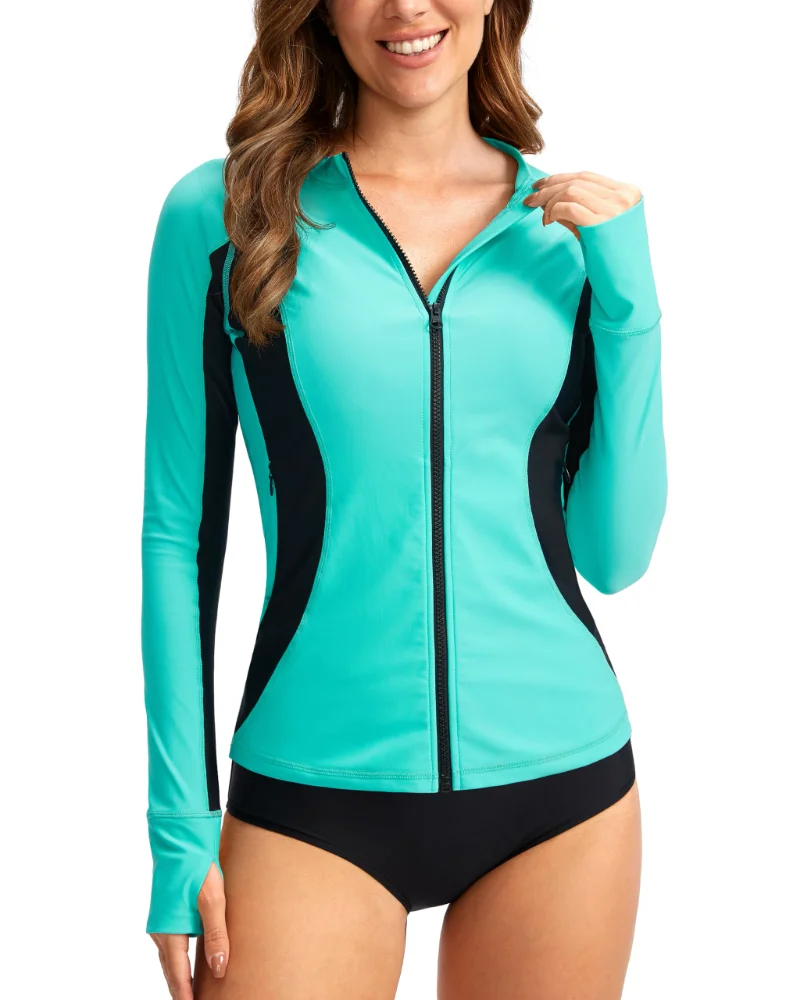
Coverage is as important as the UPF figure. A fabric with a high UPF will still leave skin that is not covered exposed to solar radiation. The American Academy of Dermatology advises you to cover as much of your skin as possible when you spend time outdoors, and the recommendation underscores a simple point: protection ends where the cloth ends. On SANTINY pieces the long-sleeved rash guards with a high neck cover the most skin, while sleeveless and cropped rash guards cover the least. The figure printed as a label pertains to the cloth that is present, and it does not extend beyond hems, straps or openings. Three situations, what a UPF figure covers in each, and what it does not:
| Situation | What the figure covers | What it does not |
|---|---|---|
| Long-sleeved, high-neck rash guard | The UPF of the dry, unstretched fabric over the covered skin | Exposed neck, wrists, face, legs and any gaps at seams |
| Swim skirt at hip level | The UPF of the dry, unstretched skirt fabric where it lies against the body | Upper thighs and any skin above the skirt line that is exposed |
| General card figure | The label UPF as given for dry, unstretched cloth | Wet or stretched fabric, uncovered skin, and shadowing or reflection effects |
Think of coverage before the number, and pair a garment with a hat and sunglasses when the day asks for more shielding than cloth can give.
How a rash guard fits into the rest of the advice
A rash guard is one component of a wider approach to sun safety. The American Academy of Dermatology recommends a broad strategy: cover as much skin as possible, avoid loose or open weaves, favour darker colours for more absorption, and wear a wide-brimmed hat and sunglasses that provide UV protection. That advice places a rash guard as a practical covering for torso and arms, depending on the cut you choose. A long-sleeved, high-neck rash guard will reduce the amount of exposed skin across shoulders and chest, while a sleeveless or cropped style will leave more surface area open to the sun. Consider what you will do next to the water: swimming for long periods, sitting on a boat, hiking with intermittent shade. Each of those activities changes the balance between covered and uncovered skin. Pair a rash guard with a hat and UV-rated sunglasses when you expect a long exposure, because the garment cannot shield your face or the backs of your hands unless it covers them. Reapply any other protections you use according to their instructions, and keep in mind that fabric performance can change with wetting and stretching, so select styles that match the movement and moisture you anticipate.
Reading the figure on a SANTINY card
When you look at a SANTINY card, read the UPF figure as the label gives it: the number describes dry, unstretched cloth. The Skin Cancer Foundation explains that a UPF 50 fabric "blocks 98 percent of the sun's rays", and it places 50+ in its top band. On the SANTINY site, the swim skirts, swim shorts, rash guards and sun layers print UPF 50+ on their labels, as do the hiking shorts, the golf polos, the UPF tees and long-sleeve tops and the cargo skorts. The tank tops, the fleece-lined pieces, the joggers and most of the tennis skirts do not. The figure on a card therefore helps you compare fabric protection levels across styles, but you must combine that information with coverage, colour, and the likely wet or stretched state of the garment. The American Academy of Dermatology gives a practical example showing how differently materials perform: it notes that a long-sleeved denim shirt provides an SPF of about 1,700, while a white T-shirt provides an SPF of about 7. Those magnitudes show why fabric choice and coverage matter as much as label numbers. A UPF figure is a starting point, not a complete plan for a day in the sun.
More of this sort of thing is in Shore Notes, the SANTINY team keeps the whole range one click away on the front page, and the sources behind every sun and label claim are listed on how we update the catalogue.
This article is general information about how sun-protective clothing is rated and about what dermatology bodies recommend. It is not medical advice and not a promise about any one piece. A UPF figure on a card is printed as the label gives it and describes dry, unstretched cloth; nothing here claims a garment prevents sunburn or any skin condition.